call us: +31203311214
From Desktop VR Research to Precision Optical Tracking
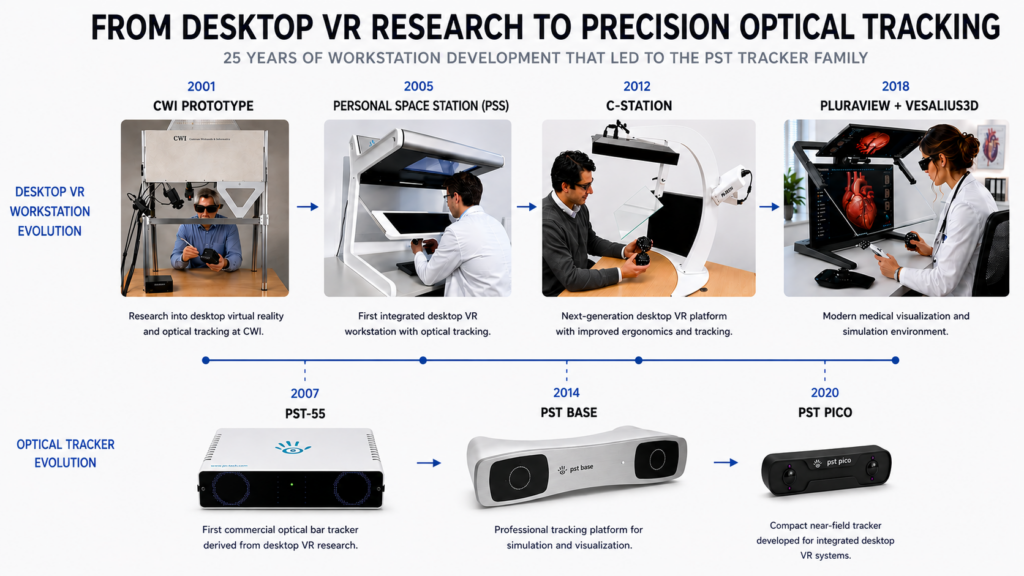
The history of PS-tech optical tracking: How Workstation Development Led to the PST Tracker Family.
More than twenty years ago, researchers at CWI (Centrum Wiskunde & Informatica) began exploring new ways to interact with digital information in three-dimensional space. What started as experimental desktop virtual reality systems would eventually evolve into two complementary technology platforms: PS-tech optical tracking and Vesalius3D medical visualization. If you’re unfamiliar with optical tracking technology, see our page on Optical Tracking Explained.
The PST tracker family is the result of more than two decades of innovation in stereoscopic visualization, human-computer interaction and optical tracking. What began as research at the Centrum Wiskunde & Informatica (CWI) in Amsterdam evolved into a series of desktop VR workstations and, ultimately, into the optical tracking products that PS-tech develops today.
The evolution of PS-tech’s workstation platforms and PS-tech optical tracking technology went hand in hand. Each new generation of desktop VR systems introduced new tracking challenges, driving the development of increasingly capable optical trackers.
The Origins of PS-tech Optical Tracking
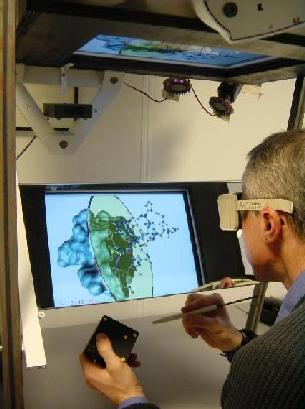
The story begins at CWI, where researchers explored the concept of desktop virtual reality. Unlike large immersive installations, these systems aimed to bring stereoscopic 3D visualization directly to a user’s desk.
By combining stereo displays, head tracking and intuitive interaction techniques, users could look around and interact with virtual objects in a natural way. These early experiments laid the foundation for both PS-tech’s visualization systems and its future tracking technology.
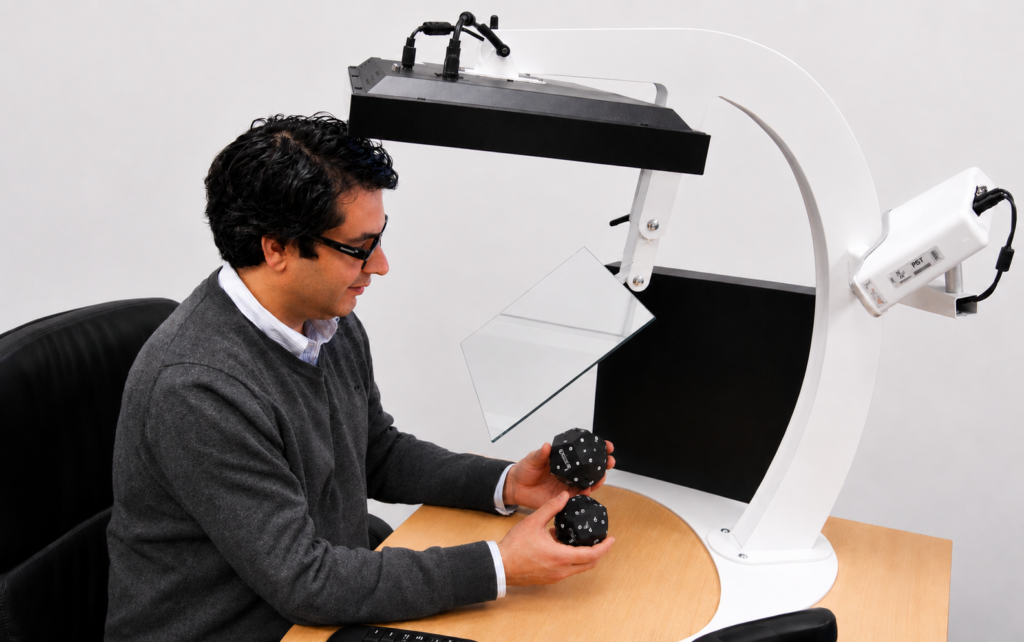
The Personal Space Station (PSS)
In 2005, a spinout company was established to commercialize the technologies developed at CWI. The company was initially named Personal Space Technologies, reflecting its origins in the Personal Space Station (PSS) project and its focus on desktop virtual reality.
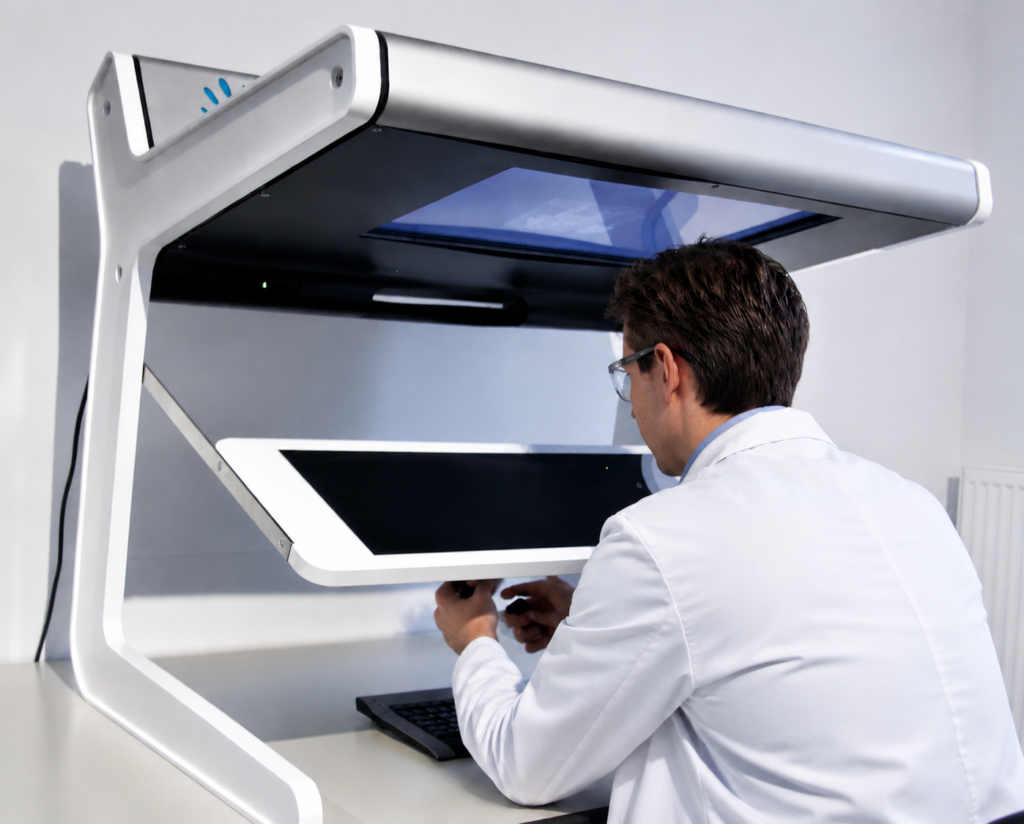
The company’s first product was the Personal Space Station (PSS), a desktop visualization system that combined stereoscopic displays, head tracking and interactive software into a compact workstation. The PSS demonstrated that immersive visualization could be brought from research laboratories into practical applications.
Although visualization was the primary focus, the system also highlighted the importance of accurate, low-latency tracking. Small delays or inaccuracies immediately affected the user experience, creating challenges that would later drive the development of dedicated tracking technology.
The First PS-tech Optical Tracking Systems
As desktop 3d visualization systems became more widely adopted, the demand for accurate, pre-calibrated and easy-to-use optical tracking increased. Users needed tracking technology that could be integrated quickly and deliver reliable performance without extensive setup.
To address these requirements, PS-tech introduced the PST-55 in 2007. Designed specifically for short-range applications, it combined high accuracy with a compact bar tracker architecture that remains the foundation of modern PST systems.
The PST-55 established many of the design principles that continue to define PS-tech optical tracking today, including stable calibration, simple installation and reliable operation. It also introduced the bar tracker architecture that remains the foundation of the PST product family. Read more about Bar Trackers vs Multi-Camera Tracking.
From Workstations to Tracking Technology
As desktop VR technology continued to evolve, the company developed the next generation of workstation platforms: the C-Station.
Introduced in 2012, the C-Station refined the concepts first explored in the Personal Space Station. Improvements in display technology, ergonomics and interaction made the system more practical and comfortable for professional use.
At the same time, the increasing demands of the workstation platform continued to drive innovation in optical tracking technology. Accurate head tracking remained essential for creating a natural and responsive user experience, further strengthening PS-tech’s expertise in short-range optical tracking.
The experience gained through the development of systems such as the C-Station helped shape the engineering principles that continue to define PS-Tech optical tracking systems today.
The PST Base and PST Iris
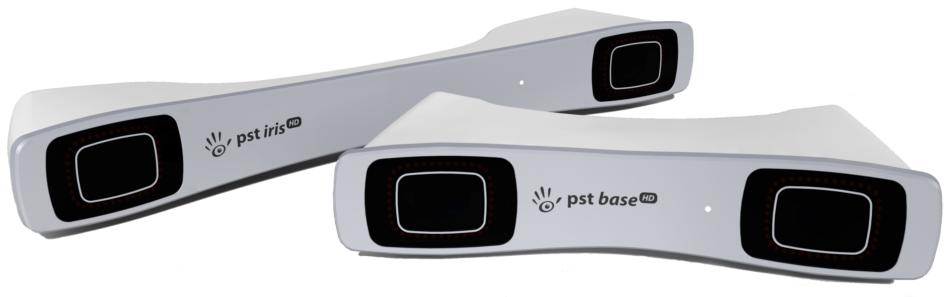
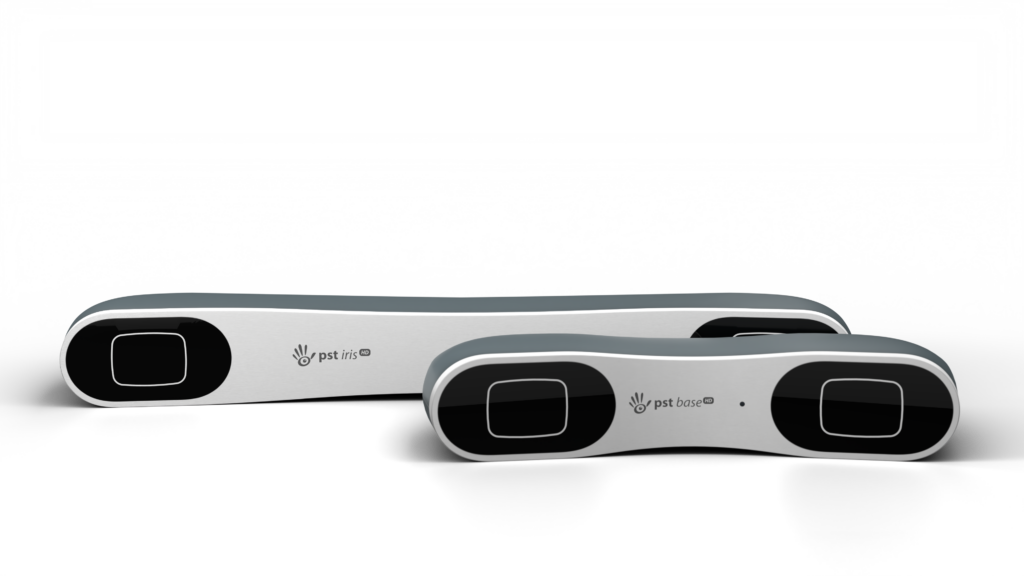
Building on the success of the PST-55, PS-tech introduced the PST Base in 2014. The new platform offered improved performance, larger tracking volumes and greater flexibility for simulation, visualization and research applications.
The same technology platform also led to the development of the PST Iris, extending optical tracking to larger environments and longer working distances. Together, these systems enabled applications ranging from desktop visualization and medical simulation to immersive virtual reality environments and research laboratories.
The success of both platforms later resulted in HD versions with higher frame rates and wider fields of view, further expanding the capabilities of the PS-Tech optical tracking portfolio.
Becoming Specialists in Near-Field Tracking
PS-tech’s tracking expertise was shaped by years of desktop VR development.
In desktop VR systems, tracking data directly controls the user’s viewpoint. As a result, latency, jitter and measurement stability have an immediate impact on the user experience. Developing reliable workstation platforms therefore required highly accurate tracking, stable calibration and low-latency processing.
These requirements became the foundation of the PST tracker family and continue to influence PS-tech’s tracking technology today.
The 3D PluraView Challenge
In 2018, PS-tech’s expertise in desktop VR and near-field tracking led to a new opportunity.
The 3D PluraView stereoscopic workstation required a compact optical tracker that could be integrated seamlessly into the display system while maintaining high tracking accuracy.
Traditional tracking systems were simply too large for the application.
The challenge was to create a tracker that delivered professional performance while fitting within the limited space available inside the workstation.
The PST Pico
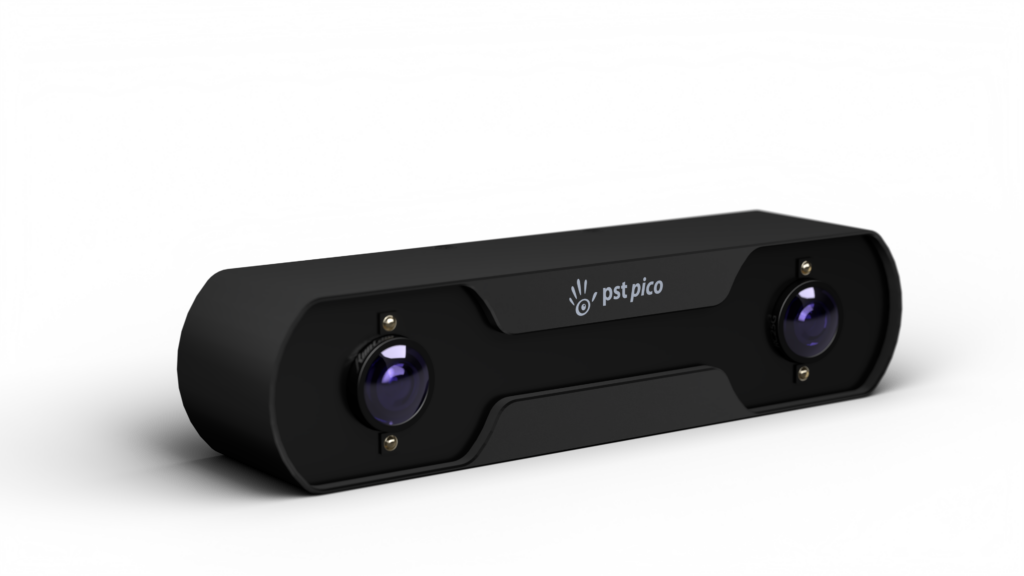
he PluraView project ultimately led to the development of the PST Pico.
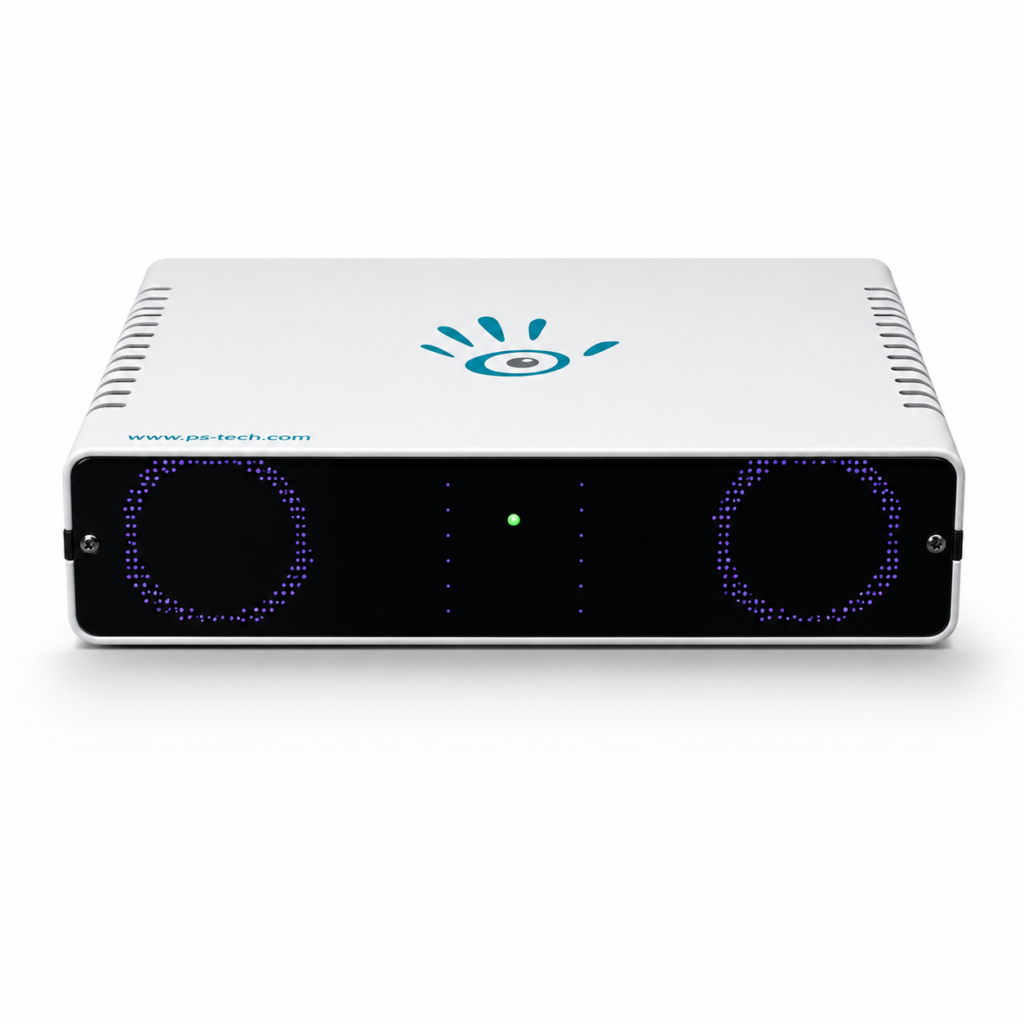
Introduced in 2020, the compact stereo camera system combined high accuracy with a very small footprint, making it suitable for desktop visualization, simulation and OEM integration.
Although considerably smaller than previous generations, the PST Pico remained firmly rooted in the design principles established by the PST-55 more than a decade earlier.
Beyond Desktop Visualization
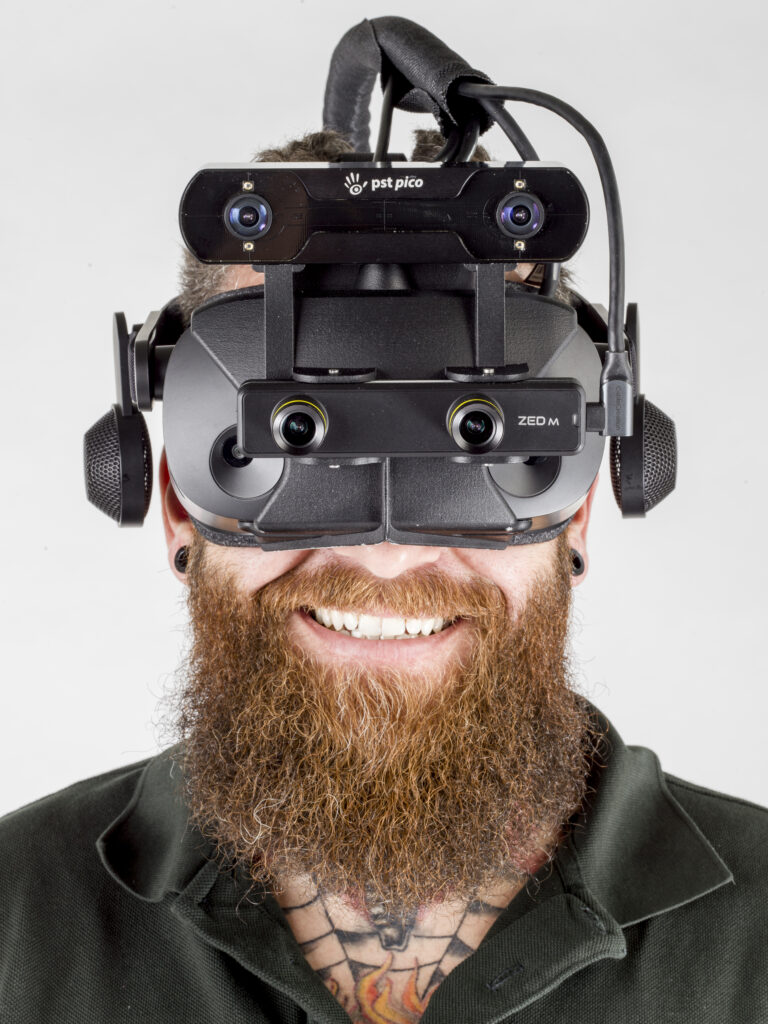
The compact PST Pico also proved well suited for head-mounted applications (HMD). For the Fronius virtual welding simulator, the tracker was further optimized to reduce weight and improve precision, extending the technology into professional simulation and training environments.
From Desktop VR to Medical Visualization
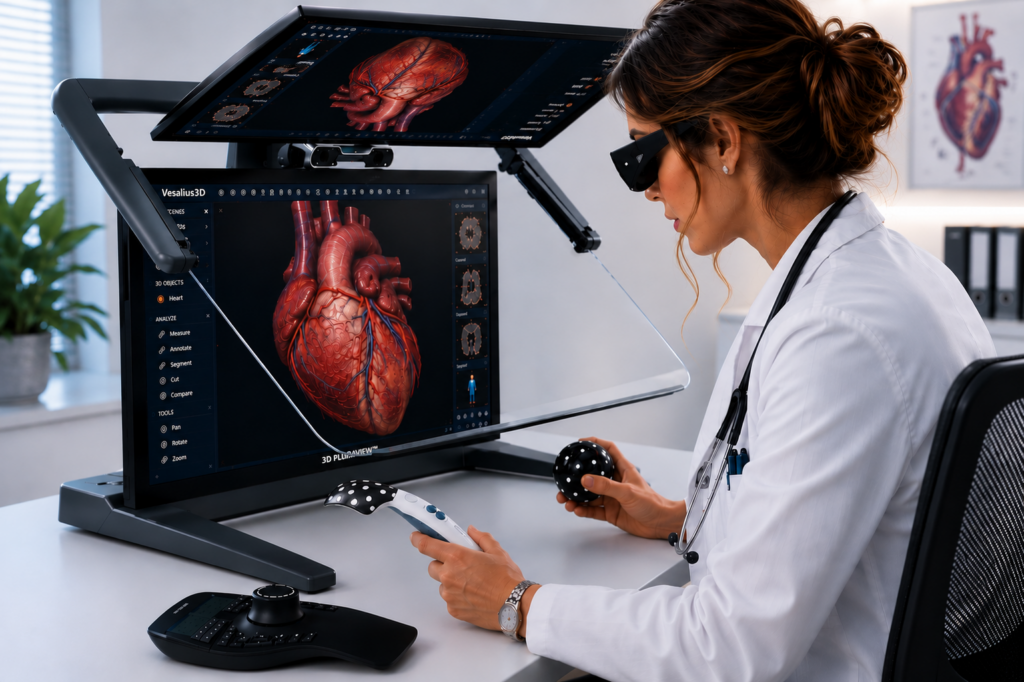
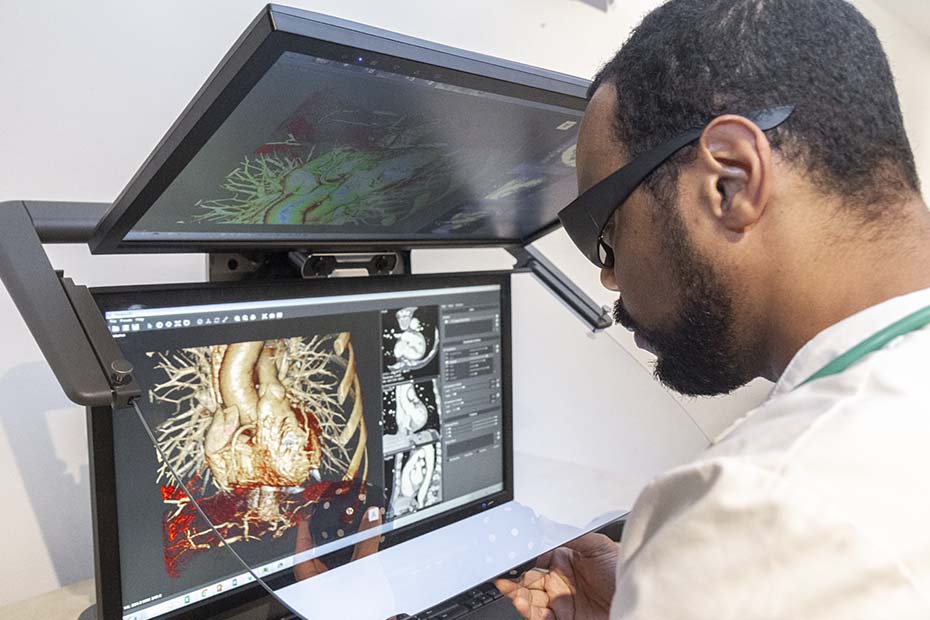
The combination of the PST Pico, 3D PluraView and Vesalius3D opened the door to advanced medical applications.
Doctors, researchers and medical students can explore CT and MRI datasets in true stereoscopic 3D while interacting naturally with anatomical structures.
Applications include:
- Medical education
- Surgical planning
- Clinical training
- Patient communication
- Anatomical research
The same tracking technology originally developed for desktop virtual reality now supports advanced medical visualization and simulation workflows.
The platform has even been adapted for tracked surgical instruments, allowing users to interact directly with virtual anatomical models using real-world tools.
Looking Back—and Forward
The evolution from a research prototype at CWI to today’s PST tracker family illustrates a unique development path.
Rather than starting with a tracking product and searching for applications, PS-tech optical tracking systems were developed through real-world visualization challenges. Every workstation generation introduced new requirements, and every new tracker generation emerged from solving those challenges.
What began as Personal Space Technologies, a company founded to commercialize desktop VR research from CWI, has evolved into PS-tech: a specialist in high-precision optical tracking solutions for simulation, medical visualization, research and industrial applications.
Today, that journey continues through ongoing developments in optical tracking, simulation and medical visualization. In 2026, PS-tech will introduce newly redesigned versions of the PST Base and PST Iris, bringing the next generation of tracking technology to applications ranging from desktop workstations to large-scale immersive environments.
More than twenty years after the original research at CWI, the same focus on precision, reliability and user experience continues to drive the evolution of PS-tech’s optical tracking solutions.