call us: +31203311214
call us: +31203311214
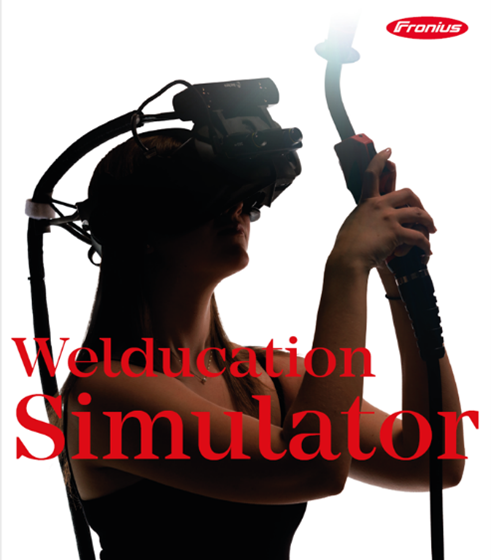
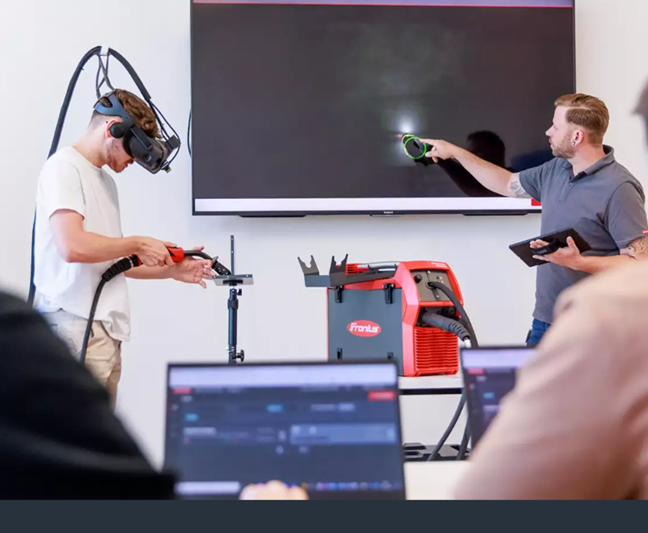
Fronius Welding Simulator with PST Pico
Welding simulator optical tracking plays a critical role in creating realistic virtual welding training environments. Fronius partnered with PS-Tech to integrate advanced optical tracking technology into its Welducation welding simulator platform, enabling accurate motion tracking, real-time feedback, and immersive training experiences.
Traditional welding training is expensive, time-consuming, and resource intensive. Trainees require materials, equipment, instructor supervision, and a safe working environment to develop their skills. Every training session consumes resources and generates costs, while mistakes can result in wasted materials and potential safety risks.
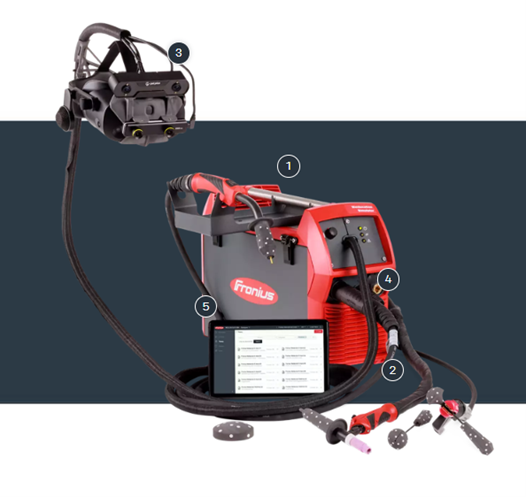
Virtual welding simulators provide an effective alternative by allowing trainees to practice realistic welding procedures in a safe and controlled environment. As part of the Fronius solution, the compact PST Pico optical tracker was optimized and integrated directly into the welding helmet and head-mounted display (HMD), creating a lightweight and ergonomic tracking solution that enhances realism and user comfort.
The Challenge: Making Welding Training More Accessible
As the demand for skilled welders continues to grow, training organizations face increasing pressure to train new operators efficiently and cost-effectively. Traditional welding education requires significant investments in materials, facilities, and instructor time.
Virtual training addresses many of these challenges by allowing students to practice welding procedures without consuming materials or generating waste. However, creating a convincing training environment requires highly accurate tracking of the welding torch and user movements.
Without precise motion tracking, the simulator cannot accurately evaluate welding angles, movement speed, position, or technique, limiting its educational value.
The Solution: Optical Tracking for Realistic Training
To provide realistic feedback and accurate skill assessment, Fronius selected PS-Tech optical tracking technology for the Fronius Welding Simulaltor.
PS-Tech optical bar trackers use stereoscopic infrared cameras to determine the precise position and orientation of tracked objects in real time. By attaching lightweight optical markers to the welding torch and tracking the user’s head position, the simulator continuously measures movements with high accuracy.
This enables the simulator to evaluate critical welding parameters, including:
- Torch position
- Welding angle
- Travel speed
- Movement consistency
- Welding path accuracy
- Head position and viewpoint
The result is a realistic training experience that closely resembles real-world welding conditions while maintaining the safety and flexibility of a virtual environment.
A Customized PST Pico Integration
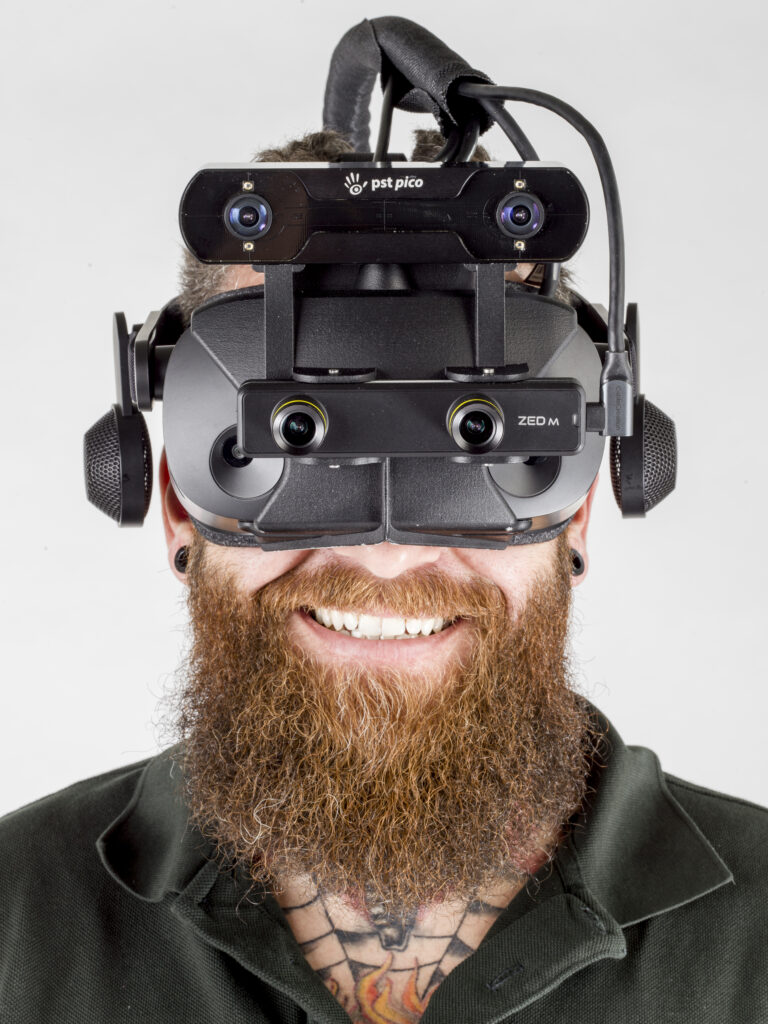
To further improve usability and immersion, PS-Tech worked closely with Fronius to optimize the tracking hardware for the welding simulator environment.
The PST Pico optical tracker was redesigned to reduce its weight, making it suitable for direct integration onto the welding helmet and head-mounted display. This lightweight design minimizes user fatigue while maintaining the high tracking accuracy required for professional training applications.
By integrating the tracker directly onto the helmet, the system moves naturally with the trainee. This creates a compact and self-contained tracking solution that accurately reflects head movements within the virtual environment.
The resulting Fronius Welding Simulator is a seamless combination of virtual reality visualization and high-precision optical tracking, allowing trainees to focus entirely on developing their welding skills rather than adapting to the technology.
Why Optical Tracking Matters in Welding Simulation
The quality of a welding simulator depends heavily on the accuracy and reliability of its tracking technology.
Accurate optical tracking allows the simulator to detect subtle differences in user technique and provide meaningful feedback. Trainees can immediately see where improvements are needed and repeat exercises as often as required.
Compared to traditional training methods, virtual welding simulation offers several advantages:
- No welding consumables required
- No material waste
- No safety risks from hot work
- Reduced training costs
- Objective performance evaluation
- Repeatable training scenarios
- Faster skill development
- Consistent assessment criteria
These benefits help organizations train more welders while reducing operational costs.
Stable and Reliable Performance
One of the key advantages of PS-Tech optical tracking systems is their stable calibration and predictable performance.
Because the cameras are integrated into a rigid optical bar tracker, calibration remains stable over time. This minimizes maintenance requirements and ensures consistent tracking quality during daily operation.
For training environments that may be used by many students throughout the day, reliability and ease of use are essential. Instructors can focus on teaching rather than managing complex tracking equipment.
Preparing Welders for Real-World Challenges
Virtual welding simulation allows trainees to build confidence and develop practical skills before working with real equipment.
Students can practice difficult procedures repeatedly, learn from mistakes, and receive objective feedback on their performance. This accelerates the learning process while reducing training costs and resource consumption.
By combining realistic simulation with precise optical tracking technology, Fronius and PS-Tech have created a training platform that helps prepare welders for the demands of modern industry.
Conclusion
The collaboration between Fronius and PS-Tech demonstrates how accurate optical tracking can enhance virtual training environments. By combining realistic welding simulation with reliable motion tracking and a customized lightweight PST Pico integration, trainees gain valuable hands-on experience in a safe and cost-effective environment.
As industries continue to seek efficient ways to develop skilled workers, optical tracking technology will play an increasingly important role in delivering realistic, measurable, and scalable training solutions.